Explore destinationNaturparke Niederoesterreich
Architecture:
AH3 Architekten ZT GmbH
Project management: Johannes Kislinger, BEng
www.ah3.at
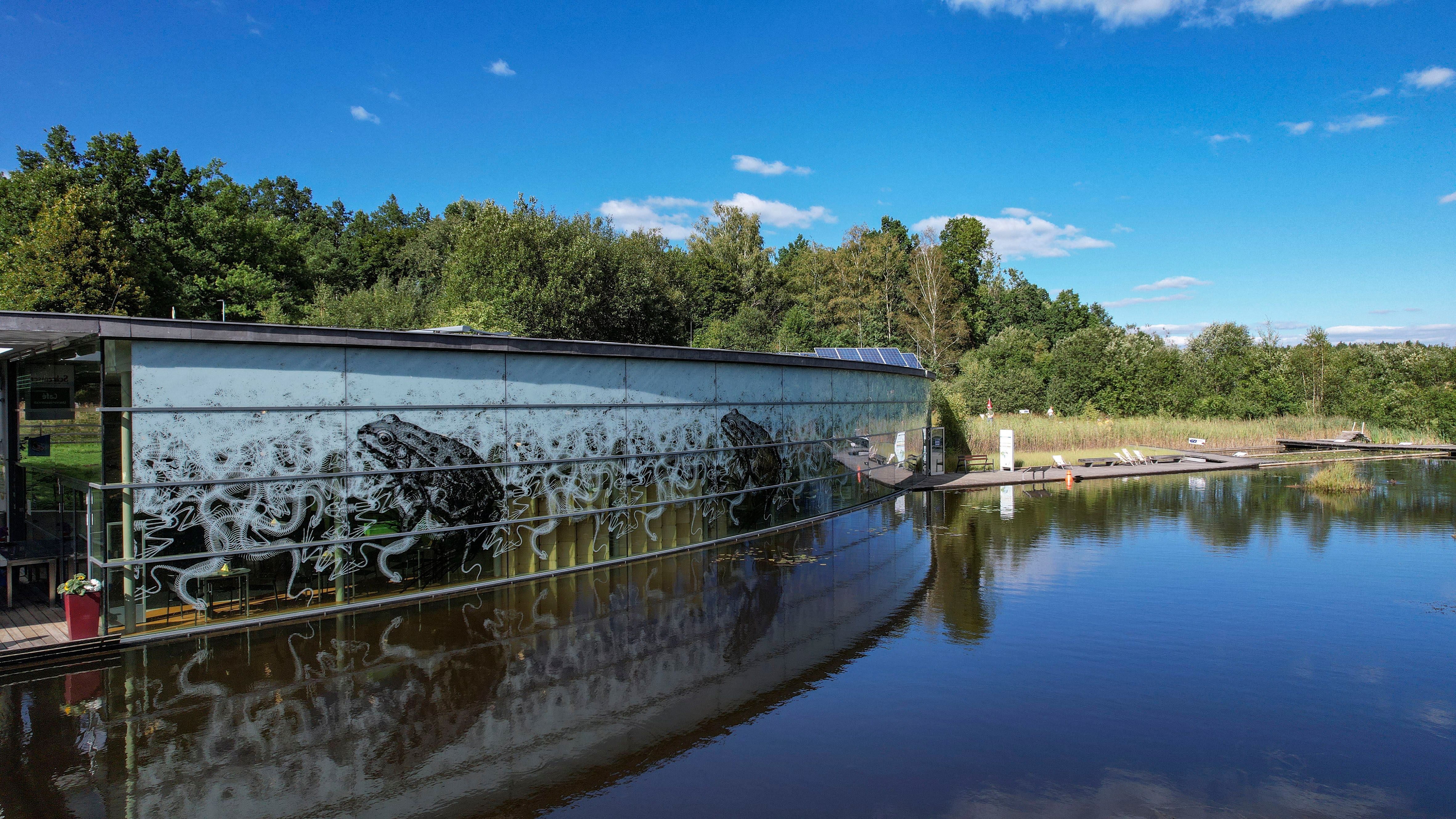
Glass façade design:
Ingeborg Strobl
Studied at the University of Applied Arts Vienna
and the Royal College of Art in London.
Mikrokosmos design:
Design & Graphics
Andrea Itzinger
www.andrea-itzinger.at
Landscape Architecture:
Engineering Practice for Landscape Planning –
DI Gerhard Prähofer
www.praehofer.eu
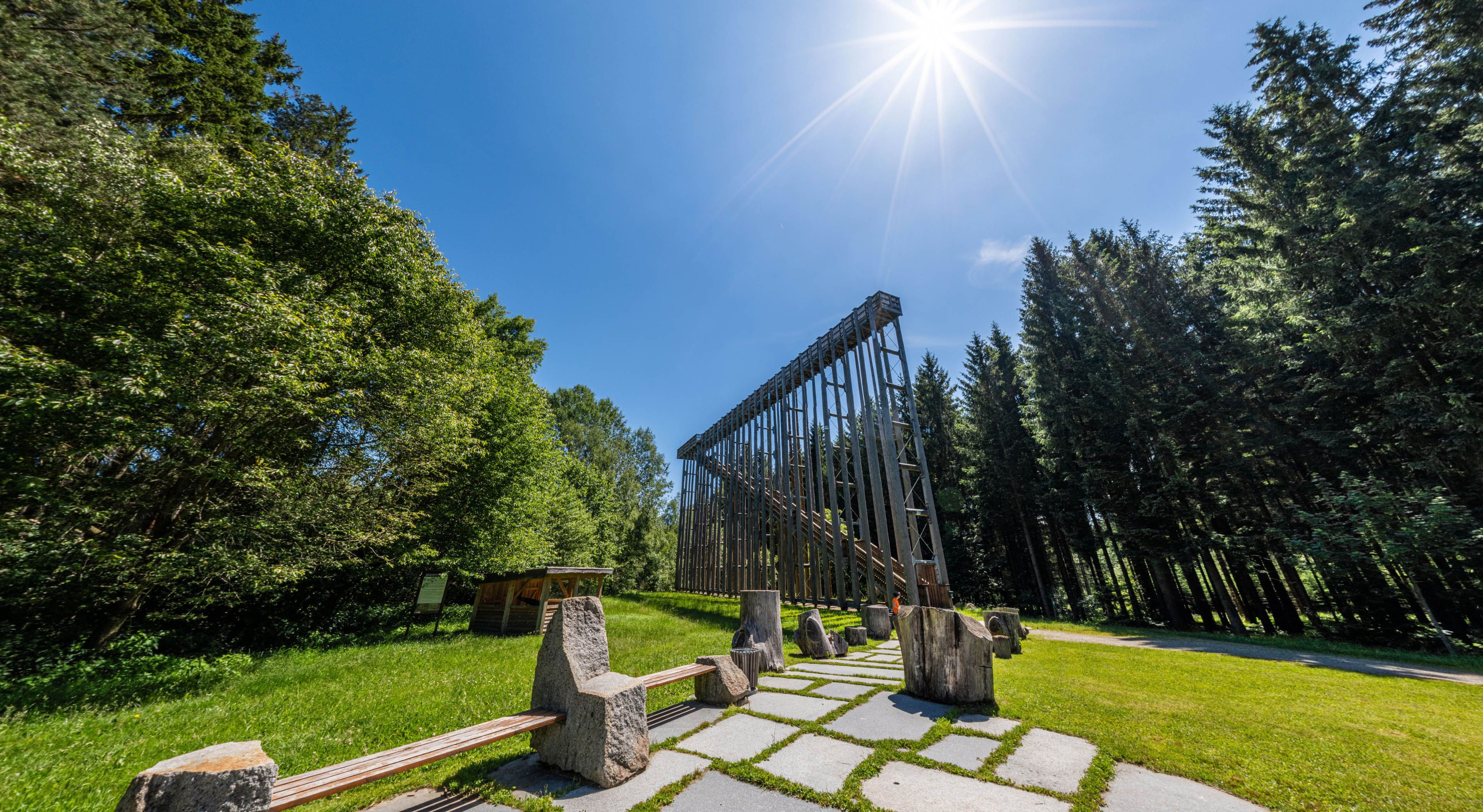
Architecture: Himmelsleiter:
Manfred Rapf, MSc
The UnterWasserReich is a Ramsar Information Centre.
The Ramsar Convention is the ‘Convention on Wetlands of International Importance’. It is one of the oldest international treaties on environmental protection, initiated by the UN and signed in 1971 in the Iranian city of Ramsar. To date, 169 states have acceded to the Convention; in Austria, 23 sites have so far been included in the ‘List of Wetlands of International Importance’, including the ponds, moors and river landscapes of the Waldviertel region.
The signatory states are obliged by the Convention to conserve biodiversity in the respective areas. Four main
areas must be implemented:
1) protection of wetlands;
2) promotion of international cooperation in the protection of wetlands;
3) promotion of the exchange of information on wetland conservation; and
4) support for the work of the Convention.
The following international Ramsar criteria apply to the Waldviertel’s ponds, moors and river landscapes: